
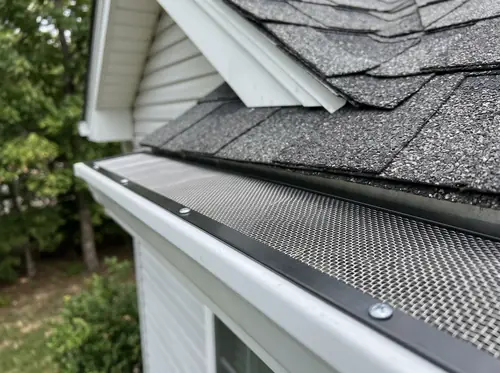
The options
| Type | How it works | Cost | Under live oaks and pines |
|---|---|---|---|
| Plastic screen | Snaps into the gutter | Low | Small leaves and needles lodge; brittle in sun |
| Perforated aluminum | Metal sheet with holes | Low to moderate | Better than plastic; needles still lodge |
| Reverse-curve cover | Solid hood; water follows the curve | Moderate to high | Leaves slide off; may overshoot in cloudbursts |
| Foam or brush insert | Fills the trough | Low | Holds debris; breaks down |
| Stainless micro-mesh | Fine mesh on a frame | Higher | Best all-round |
Why heavy rain matters
New Orleans averages about 62.5 inches of precipitation a year, and summer storms often come as short, intense bursts. A guard that sheds water past the gutter in a downpour puts that water on the ground right beside the house, which is what the gutter was meant to prevent. Reverse-curve covers work best on moderate slopes in moderate rain.
Why sun matters
Plastic breaks down under strong sun. Screens that crack and sag let debris in and can blow out in high wind. Metal guards, screwed down, last longer.
When a screen makes sense
- Short-term, on a house you are planning to re-gutter.
- On a run with only large, flat leaves above it.
- On a budget, with the understanding it will need replacing.
What to ask
- What material is the guard, and how is it fastened?
- How does it handle a heavy downpour on this roof slope?
- What upkeep will it need?
See gutter guards and are gutter guards worth it.
Snap-in screens in storms
Snap-in screens sit in the gutter with nothing holding them but their own spring. In a hurricane they can lift out and become flying debris. If you use them, check them before hurricane season starts on June 1, and consider screwed-down metal guards on exposed sides. See the hurricane season checklist.