
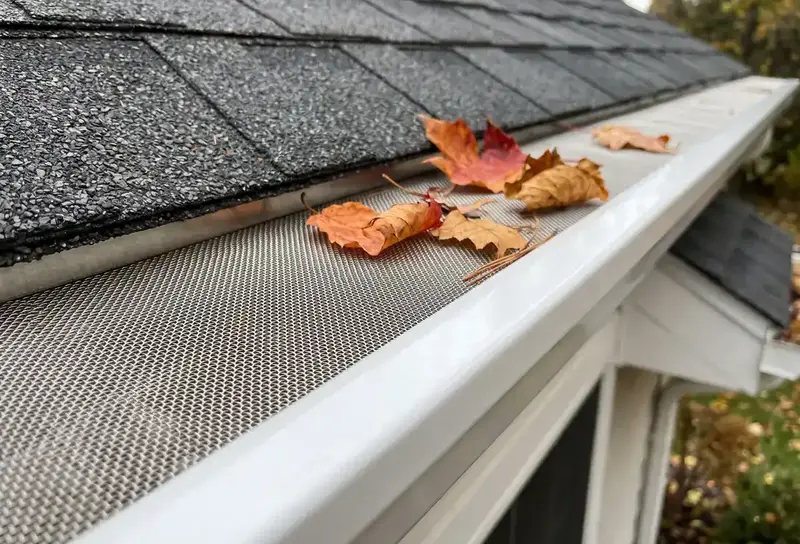
Why micro-mesh works under New Orleans trees
The trees over many New Orleans roofs drop small, tough debris. Live oak leaves are small and leathery, pine straw is thin and long, and crape myrtle and other trees shed tiny seeds and flowers. Open screens let most of that through. A fine stainless mesh blocks it.
Keeping the gutter flowing matters here. The LSU AgCenter says Formosan termites seek water from blocked gutters and roof leaks. A guard that keeps the trough clear lets it drain, and the wood behind it dries out between storms.
How micro-mesh is fitted
- The gutters are cleaned and flushed first.
- Hangers are checked and the pitch corrected where needed.
- The guard frame is screwed to the front lip of the gutter.
- The back edge sits on the drip edge or slides under the first course of shingles, as the maker specifies.
- Corners and the ends of runs are trimmed and sealed so debris cannot slip in.
Upkeep
| Task | How often |
|---|---|
| Look up after a big storm | After each storm |
| Brush or rinse the mesh | Once or twice a year, more under pines |
| Check the downspouts | Once a year |
When micro-mesh is the wrong choice
- The gutter is too small for the roof and overflows when clean.
- The fascia is soft or termite-damaged. Fix the wood first.
- The roof is an older material that sheds a lot of grit. Grit can coat fine mesh quickly.
Compared with other guards
See screens and reverse-curve guards and are gutter guards worth it.
Guards on raised and two-story houses
The higher the gutter, the more a guard saves. On a raised house or a two-story double gallery, every cleaning means a tall ladder. A good micro-mesh guard can cut cleanings from three or four a year under live oaks to a check and a brush once or twice a year. It also keeps the trough draining between cleanings, which matters for both fascia rot and the mosquitoes that breed in clogged gutters.