
On this page
Signs it is time for new gutters
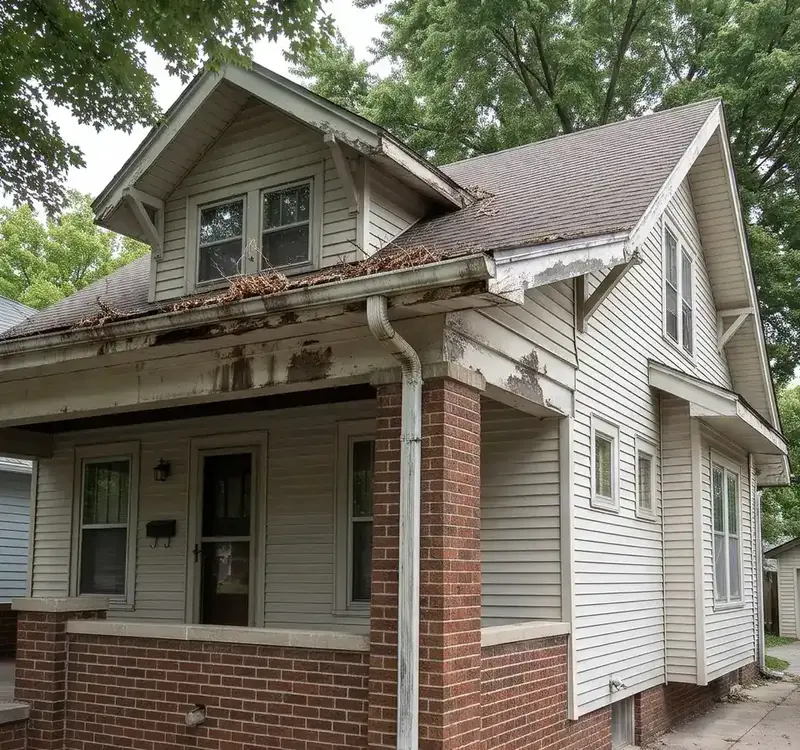
- Several joints leak, and resealing one only moves the drip to the next.
- The gutters are old sectional pieces with seams every 10 feet.
- Runs sag between hangers, or tip forward, in more than one place.
- A storm has bent or kinked most of a side.
- Paint is peeling and the wood is soft along much of the fascia.
- Downspouts are crushed, split or too small for the roof.
- The gutters were patched after one hurricane and damaged again in the next.
What a replacement includes
- Removal. Old gutters, spikes, hangers, straps and downspouts are taken down and hauled away.
- Wood check. The fascia and the ends of the rafters are probed for rot and termite damage, and bad boards are replaced.
- Roof edge. Drip edge or a gutter apron is added where it is missing, so water drops into the gutter instead of behind it.
- New gutters. Seamless runs are formed on site, pitched to the outlets and fastened through hidden hangers.
- Downspouts. Sized for the roof and strapped to the wall, with extensions or splash blocks that carry the water clear.
- Test. Water is run through each gutter before the crew leaves.
Replacing after a storm
Big storms leave many gutters damaged at once. After Hurricane Ida in 2021, power went out across the whole city and many houses lost gutters at once. If yours were damaged:
- Photograph each side of the house before anything is moved or thrown away.
- Get the roof covered first if it is open.
- Keep pieces of the old gutter until your insurer has seen the damage.
- Get at least one written quote, and be wary of anyone who asks for cash up front, wants to handle your claim, or pressures you to sign that day.
The LSU AgCenter also warns that wood debris from storms can carry Formosan termites. Ask the crew to haul away old fascia and trim rather than leaving it in a pile by the house.
Choosing the new system
Most replacements here go to seamless aluminum K-style, in 5-inch or 6-inch. On historic houses, half-round may be the better match, and the HDLC guidelines address gutter profiles for houses in local historic districts. See 5-inch vs 6-inch gutters and aluminum vs steel vs copper.
Questions to ask
- What exactly is being removed and replaced?
- How will you check the fascia, and how is any repair priced?
- What size, metal thickness and hangers are you quoting?
- How many downspouts, and where will each one end?
- What is the workmanship warranty, in writing?
Replacement on older houses
On houses built before the war, replacement often turns up more than tired gutters: spikes driven into soft fascia, old sectional pieces patched many times, and downspouts piped into the ground. In a local historic district, the replacement should match the house. In the French Quarter, the Vieux Carré Commission reviews exterior work. On box-gutter houses, relining may be the better route. See box gutter repair.